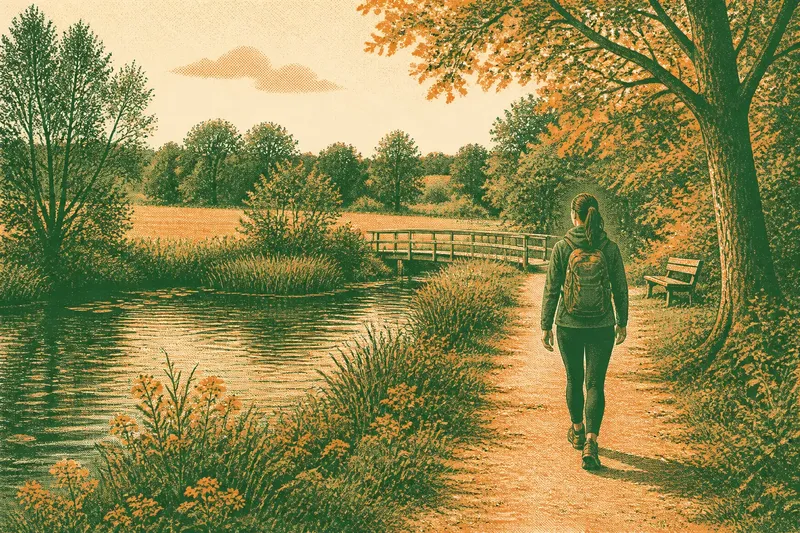
A First Visit to a Nearby Park: Finding Its Quiet Corners
A first visit to a nearby park can feel less hurried when you learn its seating, shade, and gathering places, then choose a spot that suits your pace.
The most common mistake on a first visit to a nearby park is treating its map like a list of attractions to complete. The result is often a rushed walk past the very things that make the place useful: a sheltered bench, a sunny lawn, or a path where the noise of the street falls away. Choose one kind of place to notice, then let the park show you where it can be found.
Start with park information
Before leaving, check the park’s posted hours, entrance details, access notes, and restrictions. A map can help you locate a restroom, garden, playground, or public seating area without committing to a full route.
At the entrance, look for the main signboard and note any closed paths or areas with special rules. If the park has several entrances, choose one that is easy to identify on your way out. A recognizable gate, kiosk, or sign can provide a simple reference point without turning the outing into a navigation exercise.
Choose a place to linger
Park seating suits different kinds of pauses. A bench facing a lawn makes it easy to watch activity at a comfortable distance; a seat near a garden brings textures and seasonal changes into view. An open sitting area may work better if you want room to stretch or read.
Before settling in, check that the seat is meant for public use and does not block a path, ramp, or entrance. If benches are occupied, look for another designated seating area rather than sitting on planted beds or narrow walkways.
Notice how spaces feel
Instead of trying to cover every path, compare the places you pass. Notice whether trees provide shade, whether a lawn is open to visitors, and whether a garden has signs asking people to keep to the path. These details help you decide where you would be comfortable spending time.
Listen for changes in the surroundings, too. Traffic may be noticeable near an entrance and less prominent beside a planted area; a fountain or playground may make one section livelier than another. Stay on marked paths and observe wildlife and plants from a respectful distance.
Pick a spot that fits
Think about what you want from the pause before choosing a place. For quiet, look for a public seat away from the busiest gathering area; for people-watching, a bench with a view of an open lawn may be more suitable. If the weather changes or a spot feels uncomfortable, choose another public area or head home.
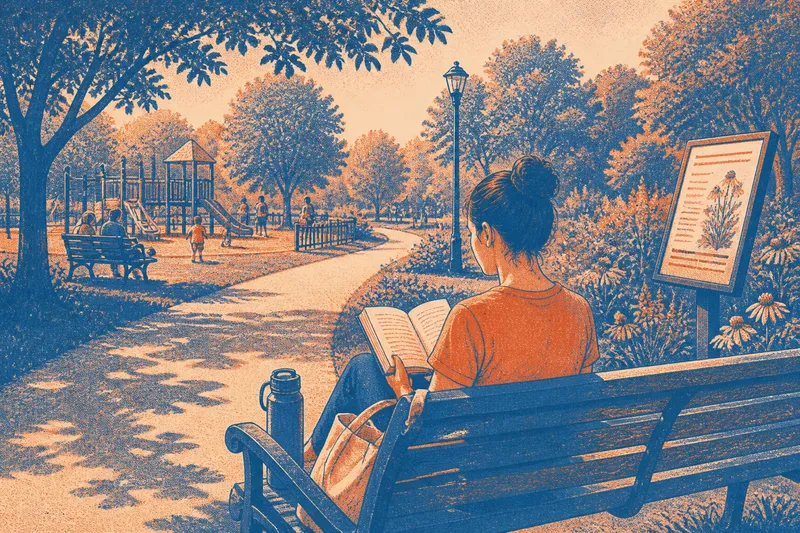
Imagine you arrive at a neighborhood park hoping to read, with a book and a bottle of water in your bag. The first bench is beside a busy playground, so you continue along the marked path and find a public seat near a garden sign; after settling there, you can hear the playground but read without facing it. The choice gives you a usable place to pause while keeping you on the park’s permitted paths.
What should you check before settling in?
Is this area open to visitors?
Check nearby signs for closures, planting rules, or restrictions on sitting. If the area is marked off, choose a clearly public bench or open sitting space instead.
Will the seat suit your purpose?
Look at the view, shade, nearby activity, and room to sit without obstructing others. If noise or exposure makes the spot uncomfortable, try another designated seat.
What if the park is crowded?
Look for an open public area away from a busy entrance or gathering point, while staying on marked routes. If every suitable place is occupied, shorten the pause or visit another time.
How can you remember a good spot?
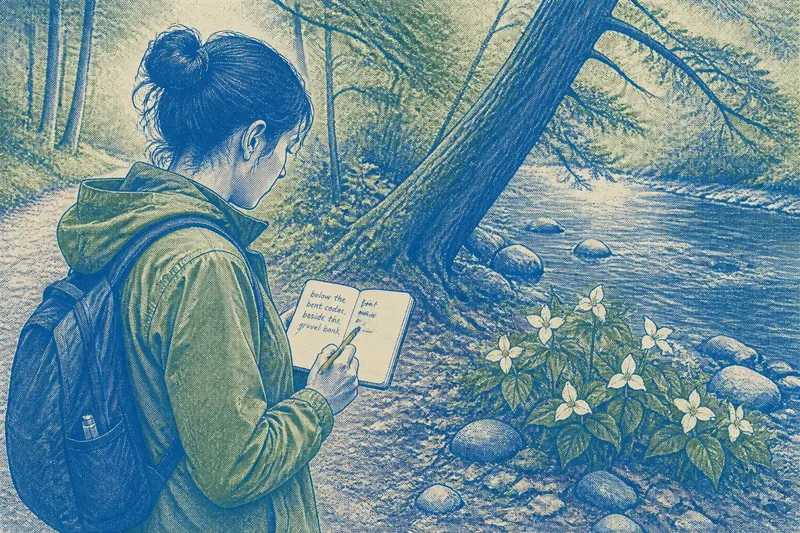
Note a nearby sign, garden, or distinctive seat in a few words on your phone or in a notebook. On a later visit, that reference can help you find the area without recording every turn.
Keep a simple visit note
A short note can make a return visit easier. Record what you observed and let it guide a practical choice:
- If the entrance sign lists a closed path, use an open route instead of approaching the closure.
- If a bench faces a busy play area, choose a seat farther from the activity if you want a quieter pause.
- If a garden sign asks visitors to stay on the path, view the planting from the path rather than stepping into the bed.
- If a seat is beside a ramp or narrow walkway, choose another spot so people can pass freely.
- If a public seat is shaded and away from the main gathering area, consider it for reading or resting.
- If a lawn is posted as restricted, use a designated sitting area rather than spreading out on the grass.
For a first visit to a nearby park, the useful question is not how much ground you covered but whether you found a place that fits the way you want to spend time. Keep the name of that place and one nearby sign or feature in your notes; those details make the next visit easier to begin.